Why UHNW Credit Is Still Assembled by Hand
Jim Gutierrez · Founder & CEO, Kalynto · March 28, 2026
In 2026, a consumer can get a mortgage pre-approval in minutes. A small business can receive a lending decision in days. A $50 million loan against a multi-entity family office balance sheet with trust-held securities, private equity commitments, aircraft, and cross-border real estate still takes four to eight weeks of manual work before a credit committee sees it.
The gap is not incompetence. It is complexity.
A consumer mortgage has standardized inputs: W-2 income, credit score, property appraisal, debt-to-income ratio. The underwriting model is well-defined. Technology has automated every step because the problem is uniform enough to systematize.
UHNW credit is the opposite. Every deal is structurally unique. The borrower might be an S-Corp business owner with K-1 allocated income that differs materially from cash distributions — a distinction that separates competent underwriting from amateur credit work. The collateral might span a brokerage trust account, a Gulfstream G650, a Palm Beach property, a wine collection, and LP interests in three private equity funds — each with different advance rates, valuation methodologies, and pledgeability restrictions. The entity structure might include revocable trusts, irrevocable trusts, GRATs approaching termination, a family foundation, and an operating company — each with its own borrowing authority, or lack thereof.
The credit analyst assigned to this deal must read 15 to 25 documents, cross-reference figures across tax returns, brokerage statements, trust agreements, K-1s, and operating agreements, build a balance sheet that correctly categorizes dozens of asset types, compute coverage ratios using the appropriate income methodology for each source, identify covenant conflicts in existing credit agreements, and produce a narrative that explains the credit story to a committee that has fifteen minutes to evaluate it.
This is skilled institutional work. It requires understanding not just what the numbers say, but what they mean in context. A GRAT terminating in six months changes the income picture. An unfunded PE capital call commitment is a liability that appears nowhere on a traditional balance sheet. A negative pledge clause in an existing credit agreement can block the entire deal — and the earlier that blocker is identified, the less time and money are wasted pursuing a structure that won’t close.
The reason technology has not solved this until now is that the problem requires domain expertise encoded into the technology itself. A generic document extraction tool can read a brokerage statement. It cannot determine whether the securities in that account are pledgeable given the trust instrument that governs them. A generic AI model can compute a debt-service coverage ratio. It cannot distinguish between K-1 allocated income and actual cash distributions, or know that the conservative approach for credit analysis is to use distributions.
The intelligence to model complex UHNW credit has only ever existed inside the proprietary systems of the largest private banks. Kalynto encodes that knowledge into a system — what we call the Kalynto Genome — and pairs it with frontier AI that reasons across complex financial documents.
The Genome operates across three layers. The Document Genome encodes recognition signals, extraction fields, and cross-document validation rules across dozens of financial document domains. The Borrower Archetype Genome applies 30 base profiles combinatorially — recognizing that a PE executive going through a divorce with cross-border assets is not one deal but three overlapping credit profiles, each requiring its own analysis framework. The Lender Intelligence Genome matches deal parameters against lender capabilities and appetite in real time.
These three layers compound with every deal the platform processes. Extraction patterns are validated. Archetype detection refines. Lender appetite signals sharpen. The institutional knowledge encoded in the Genome grows deeper and more precise over time — a compounding advantage that cannot be replicated by starting from scratch, regardless of funding.
Kalynto is the lending operating system that makes institutional-grade lending intelligence available outside the walls of the largest private banks — to advisors, family offices, and lending institutions of every size.
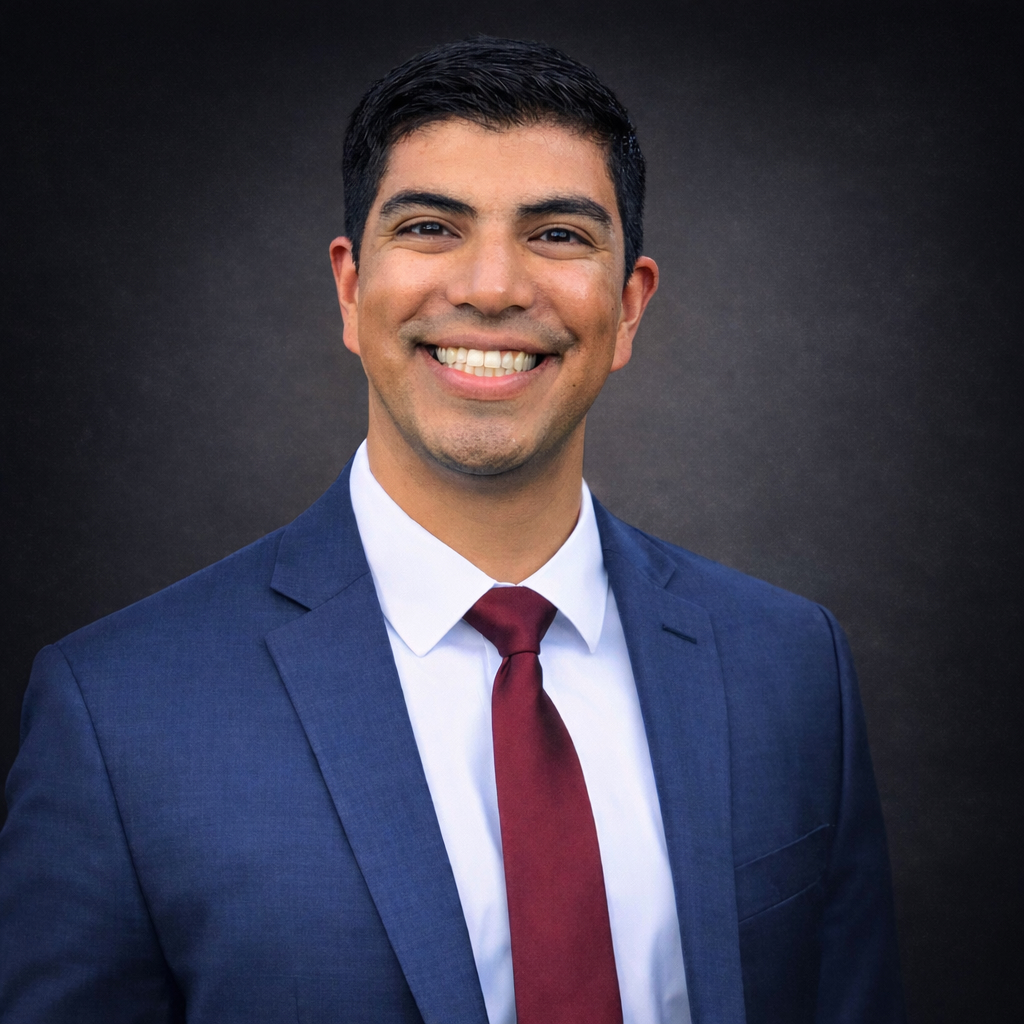
Founder & CEO, Kalynto
18+ years in institutional finance at Goldman Sachs and J.P. Morgan. Built credit and liquidity solutions for institutional and UHNW clients.
Kalynto is the lending operating system for the world's most private balance sheets.
Request a demoMore Insights
What Computation Provenance Means for Lending
Every number in a credit analysis came from somewhere. Computation provenance traces each metric to its source document, page, and confidence.
Read →Lending IntelligenceBorrower Archetypes: Why Every UHNW Deal Is Actually Three Deals
Every complex UHNW deal triggers multiple borrower profiles. Combinatorial archetype analysis reshapes credit analysis to the actual borrower.
Read →Lender IntelligenceWhat Lenders Actually Need From a Complex Borrower
Why the hardest UHNW lending deals stall — and what a structured borrower package looks like when it reaches a lending desk.
Read →